A terrifying walk on the walls of Óbidos, Portugal
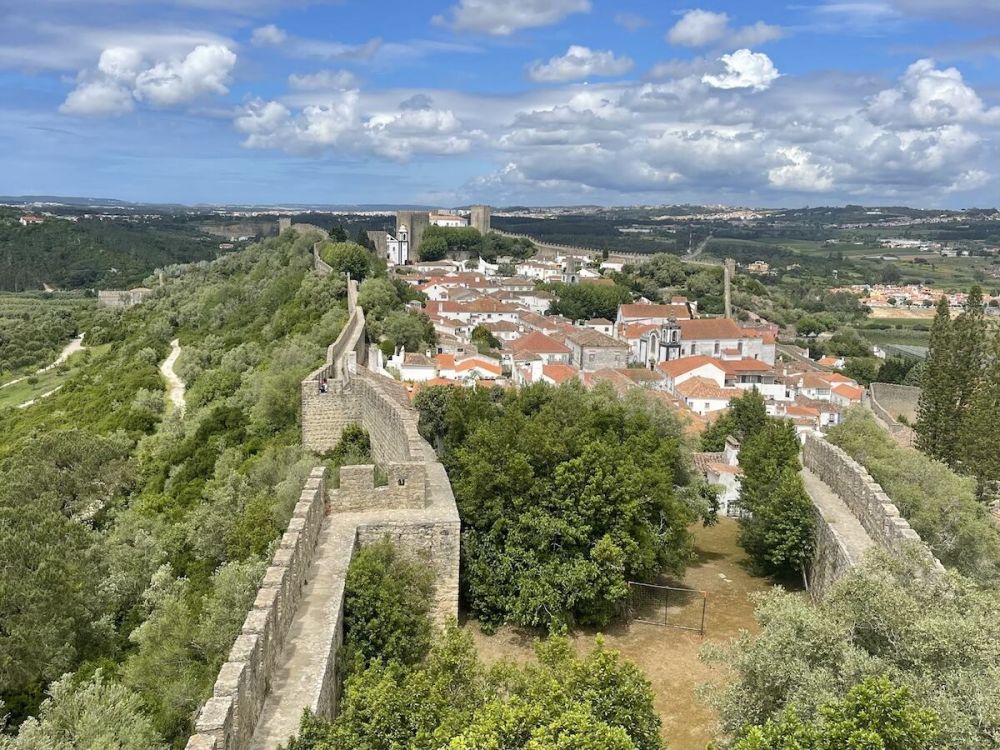
Óbidos, Portugal was a delight. I arrived with zero expectations and left singing its praises.
The city is compact, with cobbled streets and charming shop fronts to wander into. Much smaller than Sintra, Óbidos (pronounced “oh-bee-dosh”) allegedly has about 3,000 permanent residents. It’s also an official UNESCO City of Literature, one of only 63 in the world. I did nothing remotely literary while I was there but it’s nice to know that’s the vibe.
We only spent a couple of hours in Óbidos but our short stay cemented it as an eternally pleasant place in my mind. Odd, perhaps, because the main activity tapped into one of my top fears: heights.
Walking the Óbidos city wall
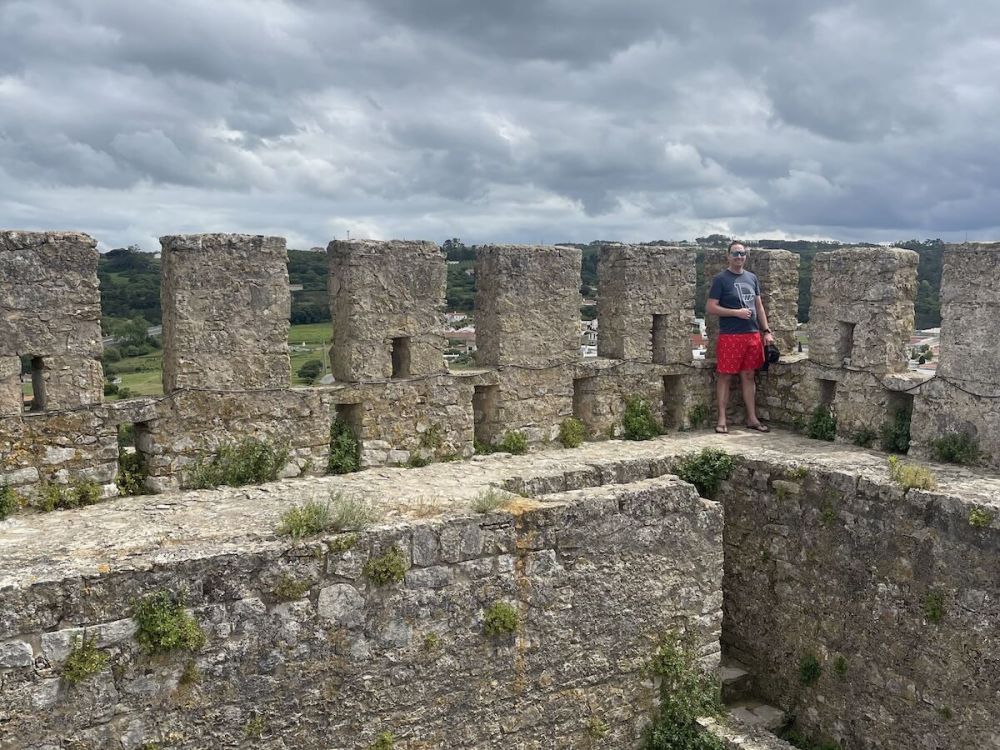
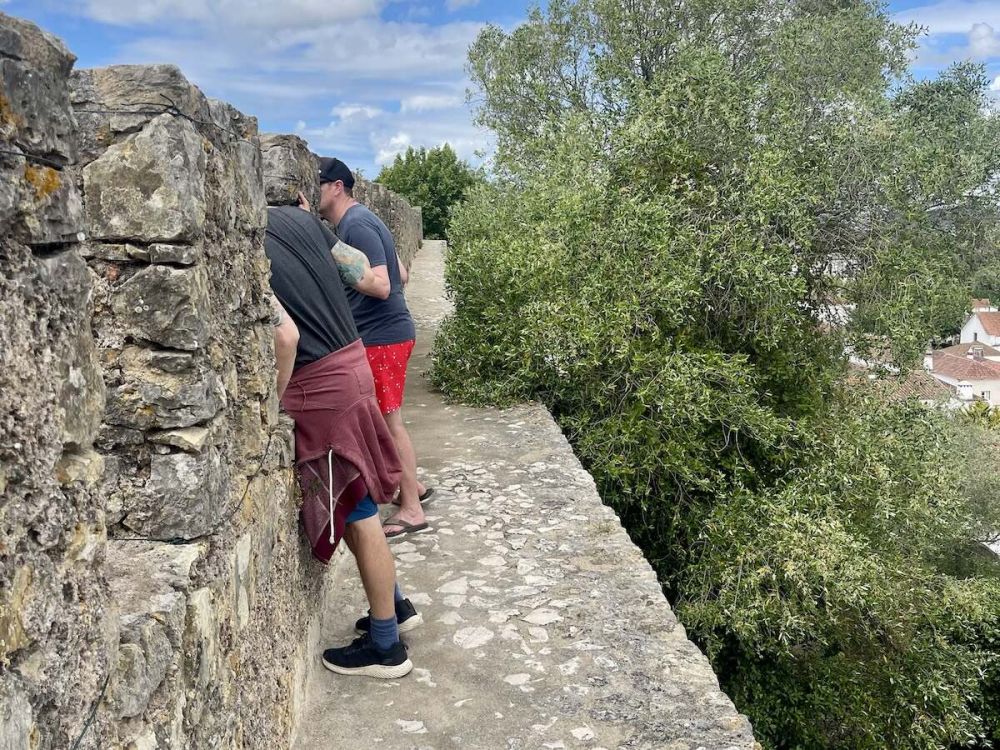
There’s a ledge running around the inside perimeter of the city walls, which form a 1.5km loop. The stairs are wide enough, but have no handrail or barrier. If heights don’t faze you this may sound fine but I assure you it is actually very scary.
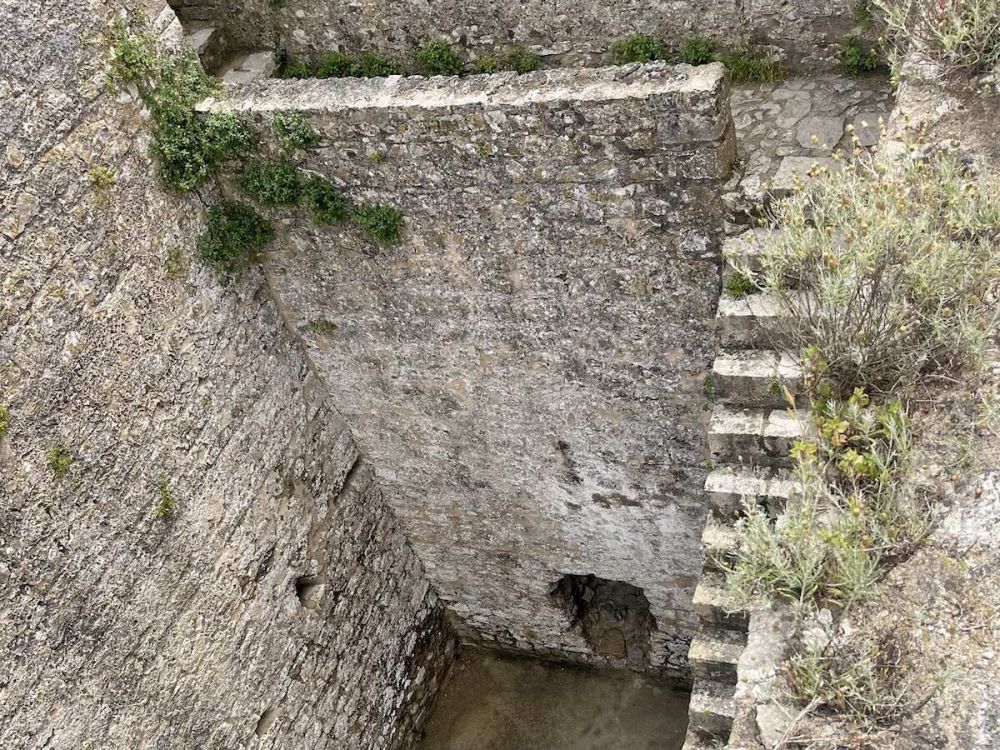
The ledge, which I suppose you could generously call a walkway, is about three feet wide. Some sections have a modest barrier at the edge, but most of it is wide open—a sheer drop of 30 feet over the edge.
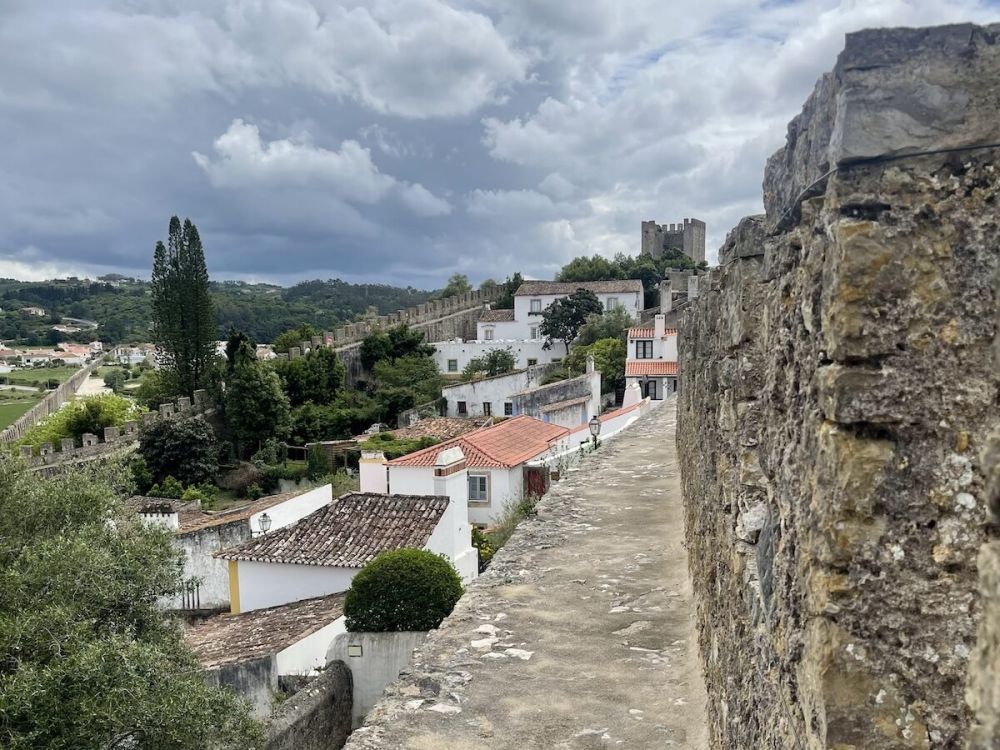
I got the impression that it was once possible to walk the entire loop. When we were there, an iron gate blocked the way not quite halfway around. There’s a staircase leading back down to the city level, so you can make your way through town back to where you started.
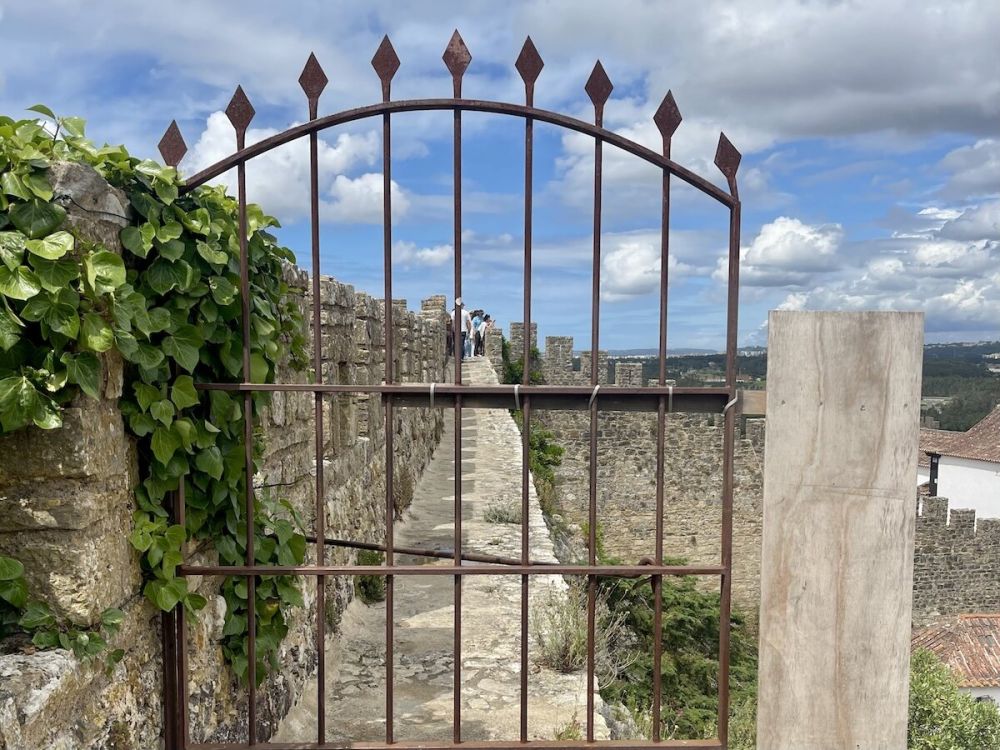
We entered the city through the main gate (Porta da Vila), turned left, and climbed the staircase there to follow the western side of the wall. The second option is to turn right through the gate and climb the stairs for the eastern side of the wall. I believe that direction will take you to the other side of the gate, and you can descend from there.
Is walking the Óbidos wall worth it?
I’m here to report that the wall is absolutely worth it, even for someone with a fear of heights who was terrified the whole time and may have said she “didn’t like it.”
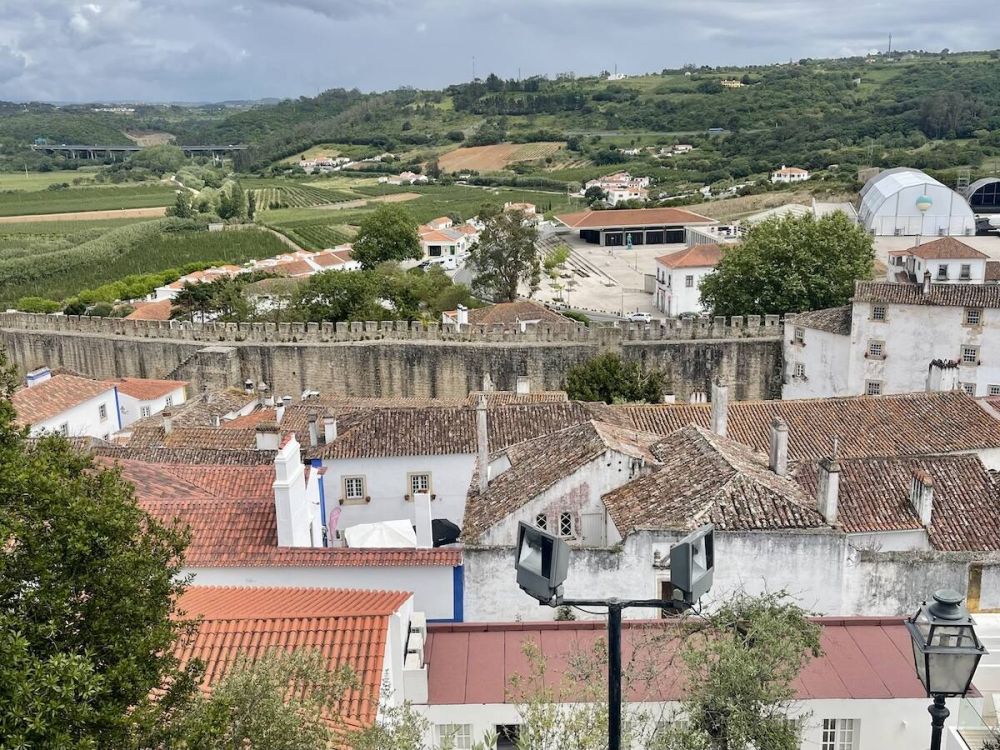
The views are stunning. You can see all of Óbidos at once, as well as the rolling countryside that surrounds it. The town is so pleasant with its white walls, orange roofs, creeping foliage, and old stone buildings.
My tactic was to hug the wall side, take small but confident steps, and focus on my breathing. That, and stay away from my husband and his friend just in case they tried to pull any funny business.
What else is there to do in Óbidos?
They didn’t make Óbidos a literary city for nothing. As part of a revitalization project in 2012, the city began to repurpose existing spaces: a church, old fire department, and wine cellar are now all bookstores. Then came The Literary Man, the world’s largest book hotel, housed in a former convent. Throw in an annual literary festival and writers’ residencies, and you have a thriving literary scene.
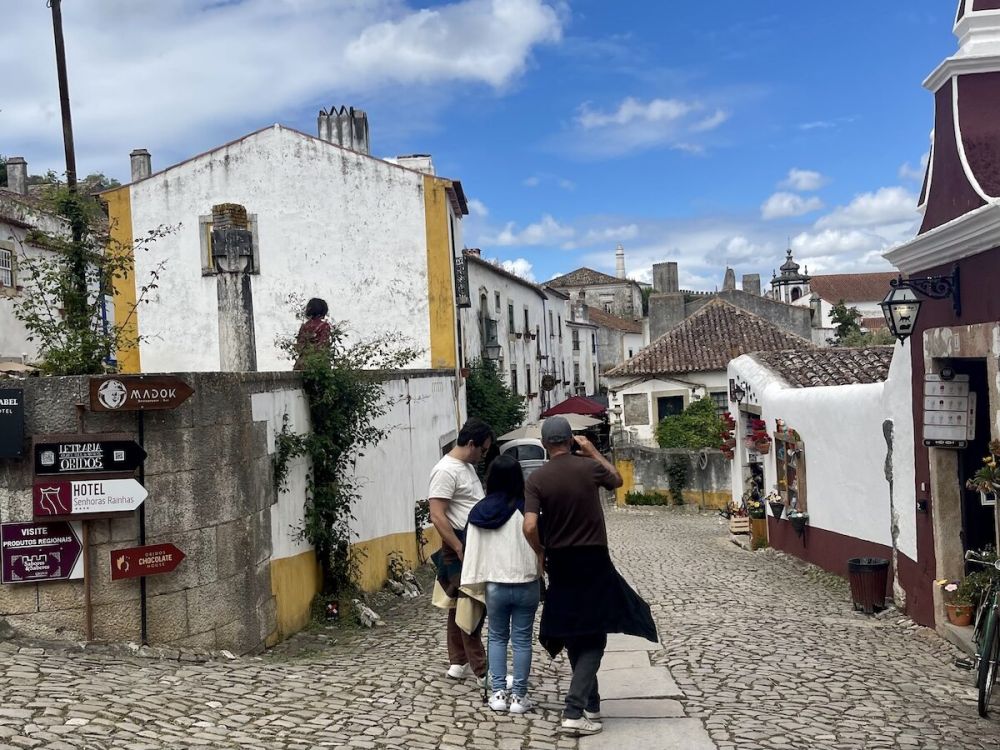
As a lifelong book lover, I obviously went into every single bookstore and the library, right? I soaked up all that literary goodness and that’s why I hold Óbidos in such high esteem? Right??
Sigh. I wish that were true, but after the wall we walked past said bookstores, got soft serve ice cream cones, and joined the rest of our party at an outdoor café.
The café was right next to the Igreja de Santa Maria, a church renowned for its beautiful tiled murals. We did not go in; my Óbidos experience was limited to the wall walk and sampling the local vinho verde.
Obviously, I need to go back to Óbidos.
Getting to Óbidos
Driving is arguably the most convenient way to get yourself to Óbidos. If you’re coming from Lisbon, it’ll take about an hour and ten minutes by car.
We drove from Nazaré, a destination made famous by its enormous surfable waves. Óbidos is about thirty minutes south of Nazaré and twenty minutes east from the pretty coastal town of Peniche.
The center of Óbidos is car-free, so you’ll need to park in one of the paid lots on the southeastern edge of the city. We didn’t have any trouble getting a spot.
Óbidos has a train station, but it’s serviced by regional trains that don’t come as frequently and stop often. It takes roughly two hours to catch the train from Lisbon.
You can also take an express bus to Óbidos from Lisbon’s Campo Grande terminal. It takes about an hour and will deposit you right outside of the city walls.