
The ultimate beginner’s guide to travel points, miles, status, and upgrades

As a frequent traveler, I was late to the points and miles game. It seemed confusing and time consuming, so I didn’t pay much attention. I had a travel credit card, but used the points to “pay myself back,” redeeming them for statement credits. Then something clicked, and I realized I could be traveling for free.
It took me a while to really understand what strategy was right for us—and yes, I’m sorry to tell you that it helps to have a strategy.
There are, of course, approximately one million resources out there about how to travel for free on points. My goal here isn’t to take you from novice to expert, but pull the curtain back and help you decide if this game is worth your time.
Do I have to travel a lot to benefit from points and miles?
First, the big question: do you have to be a frequent traveler to use points and miles?
No. Free travel is for everyone! But there are lots of caveats that we’ll get into throughout this post.
There are so many levels to this hobby. The points and miles world is great for people who like to squeeze as much value out of things as possible. (Oh hey, it’s me.) But if you just want to put yourself in a position to accrue some miles, you can do that too.
All the information below is based on my personal experience with the U.S.-based system, and may not hold true in other countries.
A basic explainer on how it all works
Play for free with loyalty programs
All major airlines and hotels have incentive programs that reward loyalty. It’s free to sign up for these programs, and you should do it, even if you only fly once a year. You’ll get a membership number, which you should always add to your booking so you can earn points, accrue status, and take advantage of benefits like free in-flight WIFI.
Most of these programs also have membership tiers (status) based on spending; the higher your tier, the better the perks. But again, you must enter your membership number to your booking before your flight or stay! You can usually recoup points for a limited time afterwards if you forget, but it’s a hassle. Don’t do that to yourself.

At this stage, it’s free and pretty low lift to play the game. All you need to do is sign up for a hotel or airline’s loyalty program and use it every time you stay at that hotel/fly with that airline. Everyone should do this! Especially if you travel for work! Even if you only travel once a year!
At the very least, you’ll accrue miles or points, (though not always if you’re flying Basic Economy). With this method alone, it’s hard to build enough points for a free flight or a free night, but it does happen. We travel a lot and live in a Delta hub, so just by flying Delta I earn enough miles to take 1-2 free domestic flights a year.
Even if you rarely fly, I’d still recommend taking a few minutes to sign up for the loyalty program. For most U.S-based airlines (American being a notable exception), the miles don’t expire, so what do you have to lose? Nothing, and you might one day get a free flight out of it.
Now for the next layer—credit cards.
Level up with credit cards
Credit cards fast track your ability to earn points that you can cash in for free travel, and they’re a huge part of the points and miles hobby. I won’t go into detail on the strategy behind opening multiple credit cards or the impact on credit score. That’s more advanced and not what we’re talking about today. However! I’ll include resources at the bottom that do cover all of that.
At a high level, here’s how it works.
You see a credit card with a sign-up bonus (also called a SUB): for example, “spend $3,000 in four months to receive a 75,000 point bonus.” You know you’ll meet that just by doing your normal spending (← this is key! You’re not going to go into debt to earn free travel!) so you apply for the card.
Put your regular spend on that credit card (and pay your bill in full each month), meet the requirements, and those 75,000 points show up in your account. Hooray!
If it’s a bank card like the Chase Sapphire Preferred or Capital One Venture, your points will appear in the travel rewards section of the account. You can spend them in that bank’s travel portal (hold your horses on that though) or transfer them to a travel partner.
If it’s a co-branded travel card, like a Hyatt or Southwest credit card, the points will be associated with that particular loyalty account and you can only spend them with that brand.
Still with me?
10 things to know about points and miles
1. Understand the relationship between this hobby and your credit.
You don’t have to take out a credit card to take advantage of points and miles, but many people do. In fact, many people take out lots of credit cards. Again, I’m not going deep on the credit card side of things; that’s more advanced and I’ll recommend resources at the bottom if you want to learn more.
But no matter your eventual strategy, this whole thing is only worth it if you continue to spend what you would have anyway and pay your cards off in full every month. Don’t buy random shit to meet a SUB! And if you’re only paying off the minimum, you’re accruing interest and this hobby is no longer free!
2. Get ready for lots of acronyms
If you go down the travel hacking rabbit hole, you’ll hit more acronyms and obscure terms than a tech startup. UR, MR, SUB, DP, GC, metal, the jargon goes on.
To start, this is all you really need to know:
- UR: Ultimate Rewards aka Chase points
- MR: Membership Rewards aka American Express points
- SUB: Sign-up bonus
- CSR: Chase Sapphire Reserve
- CSP: Chase Sapphire Preferred
3. Each brand has its own “currency”
Each system uses its own currency for points or miles, and they’re not interchangeable.
Here are some examples:
- Chase: Ultimate Rewards points
- AmEx: Membership Rewards points
- Capital One: Capital One miles
- Citi: ThankYou points
- Delta: SkyMiles
- United: MileagePlus miles
- American Airlines: AAdvantage miles
- Air France/KLM: Flying Blue miles
- Hyatt: World of Hyatt points
- Hilton: Hilton Honors points

4. Points and miles have no set value
There’s no set amount that a point or mile is worth. An economy flight from Atlanta to Amsterdam might cost 63,000 Delta SkyMiles, but the same flight could be 18,750 Flying Blue miles. A night at a Hyatt could be 22,000 points, but a night at a Hilton in the same town could run you 50,000. I’ve booked premium economy seats from Atlanta to Australia for 40,000 United miles but also seen them for upwards of 80,000 with the same airline.
I usually compare the price in points to the cash price then determine whether or not I feel like it’s good value; it’s all very subjective.
There are also taxes and fees to consider when booking flights on points; these are set by airports and you’ll still need to pay them in cash. I typically pay $5.60 in taxes and fees for domestic points flights, but recently paid $267 in fees to fly from Paris to Atlanta. The higher the airline class you’re booking, the higher the taxes.
This is part of why it’s so useful to have points with a bank like Chase or AmEx, because you can compare prices with transfer partners to determine the best value.
5. Airline alliances
Airlines also participate in ‘alliances,’ the most common being Star Alliance, Oneworld, and SkyTeam. That means I can log into my Delta account and use my Delta SkyMiles to buy an Air France flight, because the two are part of the same alliance.
However, I can’t log in to the Air France website and use my Delta miles, because the miles live in the Delta account. It also means that if I book a flight directly on AirFrance but I have Delta status, I can add my SkyMiles number to the booking and apply that status.
Airline alliances can get confusing quickly and they’re not the focus here, so for further reading hop over to this NerdWallet article.
6. Don’t get distracted by points per spend
You’re not going on your dream vacation for free because your card offers 3x points on travel spend. It’ll help, but you’ll be waiting a while.
This is why credit cards are an integral part of travel hacking; it’s the SUBs (remember: sign-up bonus) that rack up the points, not the everyday spend.
Here’s a totally made-up example, based on a card that offers 3x for travel spend and 1x for everything else. Say you regularly spend $1,500 a month on a designated travel card.
- $300 of that is on travel = 900 points
- $1200 is everything else = 1200 points
- Total earnings for the month = 2100 points
At this rate it’ll take four months to earn enough for a single night at the Indianapolis Airport Hyatt.
7. Don’t get distracted by the travel portal either
A vocal component of the points and miles community will tell you to never, under any circumstances, book through the portal. “The portal” is an all-encompassing term for the Expedia-like interface each bank provides with their travel credit cards.
Book through Chase Travel, for example, and you’ll accrue extra points per dollar spent. It’s tempting! But it also means you’re booking through a third party, which can make things more complicated if you need to make changes to your travel.
The general rule of thumb is to book directly with the brand whenever possible. There’s no reason I can think of to pay cash through the portal instead of booking direct.
However! There are circumstances where it makes sense to book through the portal using points or a combination of points and cash.
8. When does it make sense to use the portal?

This is a more advanced strategy, but I wanted to share an example. I only use the portal when I’m using benefits on the Chase Sapphire Reserve (CSR) card. I get 2x $250 annual credits on hotels designated under their higher-end ‘The Edit’ collection, which only brings down the cost marginally and still puts it out of my budget. However, Chase also offers a ‘points boost’ feature, where the points price becomes cheaper than usual when booking through the portal.
In these situations, I’ll book through the portal and pay $250 cash (to trigger the credit) and pay the rest in points.
You can also book through the portal to access airlines or hotels that aren’t transfer partners. So if you wanted to book a Delta flight using your Chase points, you could in theory book through the Chase travel portal.
It’s generally not good value to do it this way, and you could get much more from your points by transferring them to a partner. With that said, a free flight is a free flight and you should definitely do you.
9. Transfer partners are the key to flexibility
So if you’re not booking through the portal, how are you spending those points and miles from Chase, AmEx, or Capital One? You’re using transfer partners.
Transferring points was intimidating to me when I first started doing this, but it’s very straightforward.
Let’s use Chase as an example. Chase partners with ten airlines and four hotel chains, which means that your UR (Ultimate Rewards) points can become the currency for any of those 14 brands.
If you want to send points to Hyatt, here’s what you do:
- Check the Hyatt website (where you already have a World of Hyatt loyalty account set up) to confirm points availability on your dates
- Go into your Chase account (using your browser or mobile app) to initiate a points transfer from UR points to your World of Hyatt account
- Wait for the points to hit your Hyatt account
- Book your free hotel stay!
Here’s Chase’s primer on how to transfer UR points.
A few things to note about transfer partners:
- Always check the transfer ratio before sending points. In most cases it’s 1:1, but sometimes your credit card points will double or halve when you send them to a transfer partner.
- Once you send points to a transfer partner, they’re stuck there. No takebacks!
- Check availability with the hotel or airline brand before you send the points, because it can change quickly.
- Points transfers can take time to show up. In my experience it usually happens within minutes, but be aware that’s not always the case.
- Banks sometimes offer transfer bonuses. For example, a 30% transfer bonus to Virgin Atlantic will turn 10,000 UR points into 13,000 Virgin points. The bonus points can take up to a few days to appear.
- Know your transfer partners: Chase doesn’t partner with Delta, for example, so you can’t turn UR points into SkyMiles.
10. Earning points and miles with debit cards
Some travel brands, like United and Southwest, offer debit cards that allow you to earn points and miles. However, the earnings potential is limited.
You may have to keep a minimum balance in the account to avoid monthly fees, money that could be earning you more in a high yield savings account.
Here’s an example using the United Airlines debit card:
- 10,000 bonus miles after spending $500 in the first four months
- 1 mile per $1 spent on United
- 1 mile per $2 spent on all other qualifying purchases
- 2,500 bonus miles when you spend $10,000 each calendar year
Let’s say you spent $10,000 on your United debit card in a year: $500 on flights and $9,500 on other qualifying purchases. You’d find yourself with 17,750 miles—certainly enough to cover a domestic flight.
However, if you made that same spend on the United Gateway, a credit card with no annual fee, you’d rack up a minimum of 42,000 miles. I’m not trying to push you one way or the other; this is purely to illustrate why credit cards are such a big part of the miles and points strategy.
Let’s talk about status and upgrades
Instagram will have you believing everyone who plays the points and miles game is always in a lie-flat bed at the front of the plane or sleeping in a penthouse suite with floor-to-ceiling windows and mimosas on tap.
It’s not the norm, but it’s not totally far-fetched, either. If you hold status with an airline or hotel chain, you’re eligible for upgrades. Remember those loyalty programs we talked about earlier? This is when they come into play. The higher your status, the more likely your upgrade opportunities.
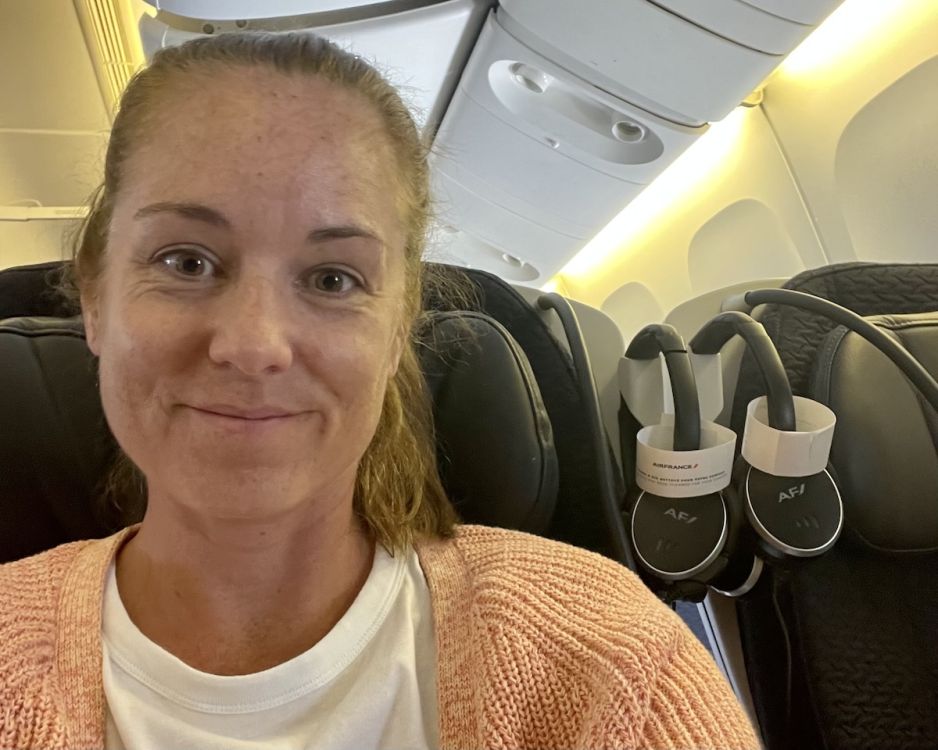
My husband travels a lot for work; he flies Delta and stays in Hiltons. His Platinum Delta status lets him choose a Comfort+ seat immediately after booking his flight, and his Hilton Diamond status means he almost always gets a room upgrade, plus free breakfast and access to hotel lounges.
This is where you do need to be a frequent traveler to see results, because status doesn’t come free. It’s based on how much you travel (or spend) with a particular brand. There are some co-branded credit cards that grant you automatic status, or bank travel cards that offer status bump promotions, but they usually come with a hefty annual fee.
But, if you travel a lot for work or in your personal life, this is why you need to be putting that loyalty number in for every booking.
How do I get a flight upgrade?
I’ve only ever been upgraded as a result of status. I’m currently a Delta Gold member, and often get upgraded to Comfort+. I even got bumped to Premium Select on a recent international flight, which doesn’t happen often. It’s a great feeling! I love it! I’m also acutely aware that I haven’t flown enough this year to retain that status, so I’m pre-emptively sad; status is fleeting.
You’ll usually have the option to purchase upgrades with miles or cash after buying your initial flights, depending on availability. It’s a toss-up whether this is good value or not, but I often see the ballpark amount of $100 per hour. So anything under $1000 to upgrade to business on a 10-hour flight is generally a decent deal. Is it really, though? That’s up to you and your budget.
However! With enough miles, you can definitely snag a deal on a business-class flight. The catch is that the deals can be hard to come by, on limited dates, and they go quickly.
What about airport lounges?
Airport lounge access is a contentious topic in the points and miles world these days. With so many travel credit cards offering access to lounges, they’re often overcrowded with long waitlists.
The rules for accessing different lounges vary widely based on your airline status, flight class, and credit cards. If I’m in a lounge, it’s usually through my Chase Sapphire Reserve, which gives me membership to the Priority Pass lounge network. Sometimes the lounges are super nice and I get in right away; other times the waitlist is so long I never see the inside of it, or they’re packed and kind of grimy.
Lounge access can certainly be a perk of the points and miles game, but I don’t consider it a value add when weighing up the costs and benefits of a credit card with a hefty fee. Lounge access and quality just aren’t reliable enough.
Loyalty versus flexibility
When I first started with points and miles, I had a hard time understanding why I shouldn’t get a Delta credit card right away. I fly Delta often, I want status with that airline, and I’d definitely use the free miles as part of the sign-up bonus.
I later realized that I was limiting my options by focusing on Delta. If your goal is strictly to get status with an airline or hotel, then yes, a co-branded credit card will help you get there. But if your goal is to do more free travel, then broaden your horizons.
When you earn points that can be transferred to partners, you’re able to be much more flexible with when you travel, where you stay, and how you fly.
Developing your points and miles strategy
Everyone’s strategy is different. Some people want to fly their whole family business class to Japan, and they’re willing to fly (aka “reposition”) to a different airport and book 10 months in advance to make it happen. Others seek out the best deal, immediately jumping on a last-minute 6,000-point flight to Europe because why not.
Some spend weeks comparing points prices, waiting for the pieces to fall into place. Others have binders full of credit cards and are always working on a SUB, with millions of miles accrued and ready to spend.
My points and miles strategy

I’m somewhere in the middle; not always working on a SUB, but taking advantage of occasional credit card offers when it makes sense to do so. We balance flexibility and loyalty, and still pay for a lot of travel in cash, which helped us gain status. With status, you also tend to earn points at a higher rate, so the benefits accumulate.
We use points-accruing credit cards to pay for everything, unless the merchant charges a fee, and pay the statements in full each month. My husband and I mostly (but not always) stay within the Chase ecosystem, which allows us to transfer points between us as needed. We’ve had travel experiences we never would have had without points, which is part of the fun for me.
In the last few years, I’ve used points to:
- Stay at adults-only all-inclusives in the Dominican Republic and Mexico
- Fly from Atlanta to Munich to Paris and back to Atlanta
- Visit family in Denver
- Go to Puerto Rico for a last minute friend trip
- Book fancy hotels in Sydney, Montreal, and Las Vegas
- Upgrade an Australian flight to Premium Economy
Two of our cards have hefty annual fees, and we reassess every year to ensure we’re still getting good value. If the fees outweigh the value, we’ll downgrade or close the cards. I’m on top of my credit card benefits and I make sure I use them, from opt-in cashback offers to hotel credits to limited-time promotions. Otherwise I’d be paying to keep an expensive metal card in my wallet.
Resources for going deeper with travel points and miles
I’m not affiliated with any of the resources linked below, just genuine recommendations based on my experience.
I learned most of what I know now from 10xTravel’s free course and the 10xTravel Insiders Facebook group. The group can be overwhelming (and aggressive) but it’s a helpful place to seek out specific answers to the questions that are bound to pop up.
I follow The Points Guy for his takes on changes to travel credit card benefits, and subscribe to the Daily Drop newsletter to stay on top of new information.
I’m also a member of the SkyMiles Life Facebook group, but it’s mostly people who are creepily loyal to Delta and like to post pictures of themselves in business class. However, it has helped me better understand the ins and outs of Delta’s loyalty program.
Good luck on your travel points journey

If you made it this far, I’m betting your interest has been piqued by this whole concept, just like mine was a few years ago. It became my whole personality when I first started learning how it all came together, so don’t feel bad if the same thing happens to you. It feels pretty good when you’re sipping on a cool drink in a comfy cabana on a much-needed break from your reality.
Work out a strategy that makes sense to you, don’t get in over your head, and you’re on your way!


